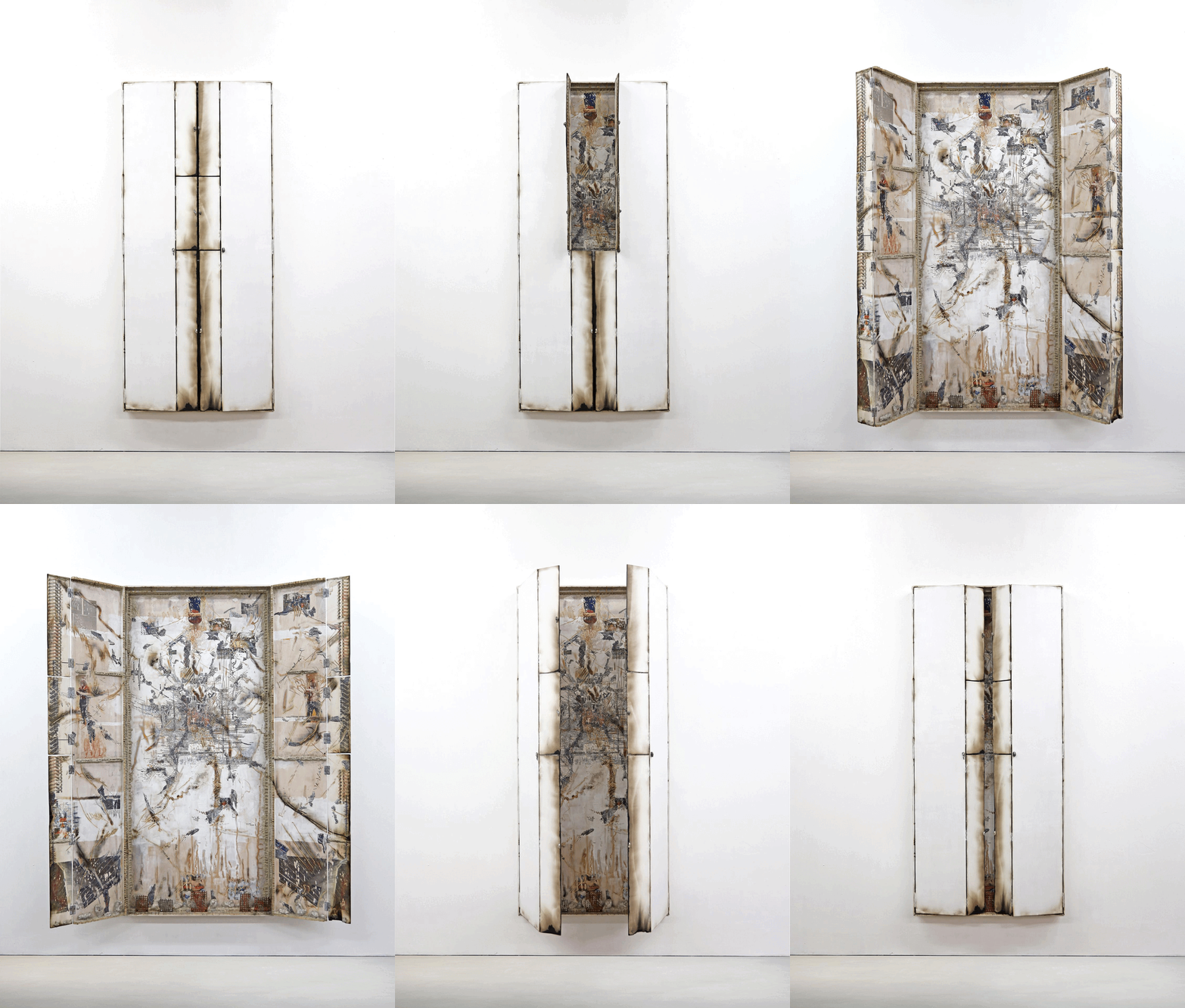
Marcin Dudek
Gate, 2025
Acrylic paint, wood, steel, image transfer, paper mâché, medical tape, UV varnish
Closed:
202.5 x 93 x 10 cm
79 3/4 x 36 5/8 x 4 in
Opened:
202.5 x 173 x 20 cm
79 3/4 x 68 1/8 x 7 7/8 in
202.5 x 93 x 10 cm
79 3/4 x 36 5/8 x 4 in
Opened:
202.5 x 173 x 20 cm
79 3/4 x 68 1/8 x 7 7/8 in
Copyright the artist & Harlan Levey Projects
From the outside, Gate is minimal, marked simply with faint scorch marks, as if emanating from its insides. Its doors are divided into 3 levels, which can be opened gradually...
From the outside, Gate is minimal, marked simply with faint scorch marks, as if emanating from its insides. Its doors are divided into 3 levels, which can be opened gradually or all at once, creating various rhythms in the revelation of this vibrant, scarred interior. Gate is inspired by architecture, both formally and conceptually: the ornamental features of the frame draw from Krakow’s urban landscape; the piece refers to stadium gateways as spaces of transition, where an individual body merges with those who have already crossed this threshold.
The wooden frame of the triptych is accented with paper-maché, impressed with the artist’s thumb-prints; this sandy grey paste is made from shredded zines, art books, religious texts, and trash picked up from football stadiums, information that shaped the young artist’s mind. At moments, this softness is traded for sharp, spine-like columns of CCTV cameras. The architectural history of stadiums is scattered throughout the panels: a diagram of Colosseum terraces, divided by social hierarchy; the earliest known depiction of a crowd headed to the arena, from a mosaic in Cologne; pages from the Green Guide, a UK publication on safety measures at sporting events, created after a deadly crowd disaster.
At the center of the work, a rectangle of scalpels frame a beating heart. At its base, the paper-maché congeals into miniature sculptures, pulped into the form of broken bodies, recalling the violence present in Dudek’s precarious and often brutal childhood.
The wooden frame of the triptych is accented with paper-maché, impressed with the artist’s thumb-prints; this sandy grey paste is made from shredded zines, art books, religious texts, and trash picked up from football stadiums, information that shaped the young artist’s mind. At moments, this softness is traded for sharp, spine-like columns of CCTV cameras. The architectural history of stadiums is scattered throughout the panels: a diagram of Colosseum terraces, divided by social hierarchy; the earliest known depiction of a crowd headed to the arena, from a mosaic in Cologne; pages from the Green Guide, a UK publication on safety measures at sporting events, created after a deadly crowd disaster.
At the center of the work, a rectangle of scalpels frame a beating heart. At its base, the paper-maché congeals into miniature sculptures, pulped into the form of broken bodies, recalling the violence present in Dudek’s precarious and often brutal childhood.